Road and Railway Bridge over the Velika Morava River
Period: 2023–2025
Location: Railway line Mala Krsna – Majdanpek – Bor – Vražogrnac – Junction 2 at km 82+142 and State Road IIB, route no. 377 at km 8+359 Požarevac (connection to State Road 33) – Osipaonica
Responsible Designer: Nikola Đorđević
Project Description
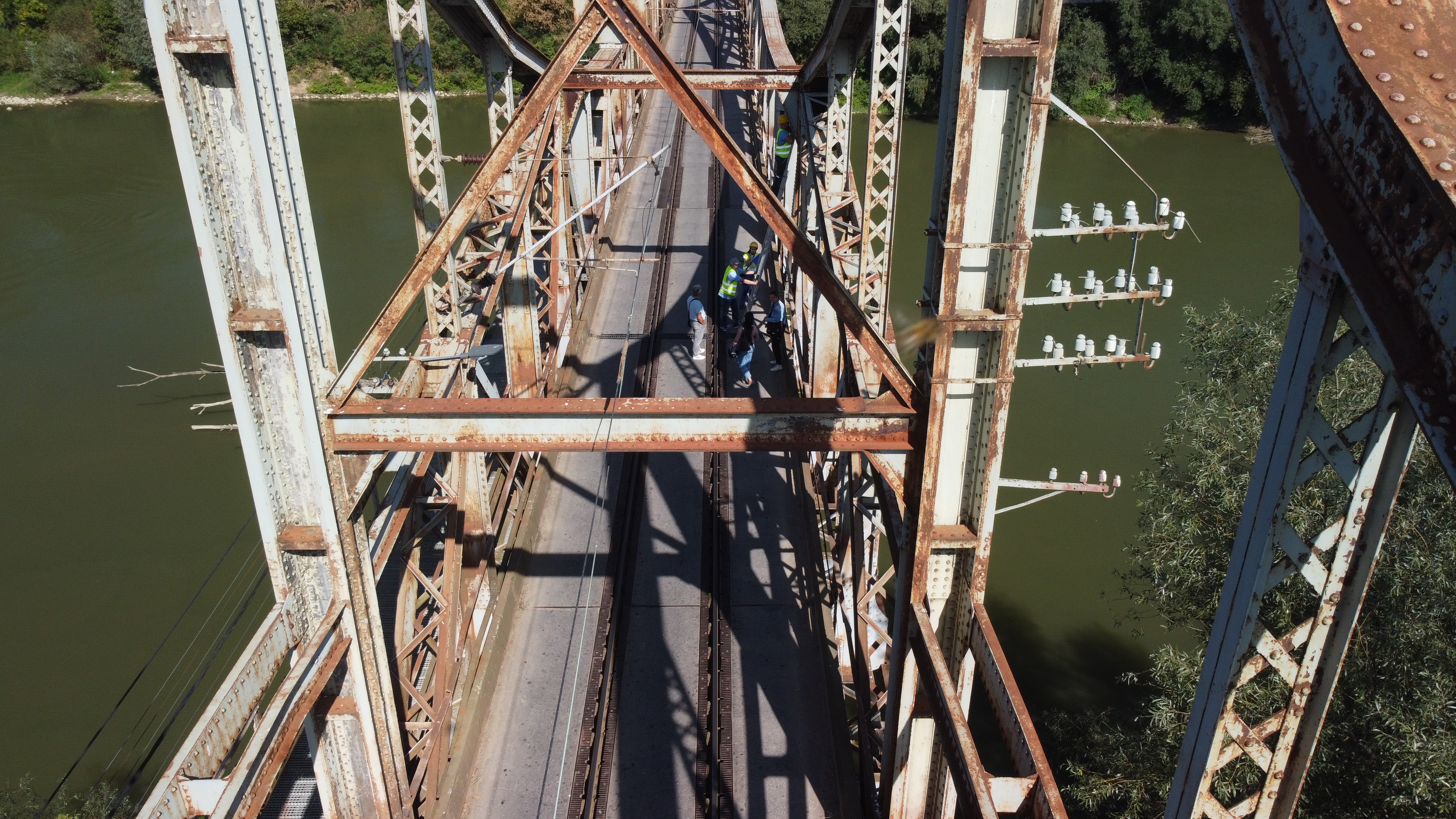
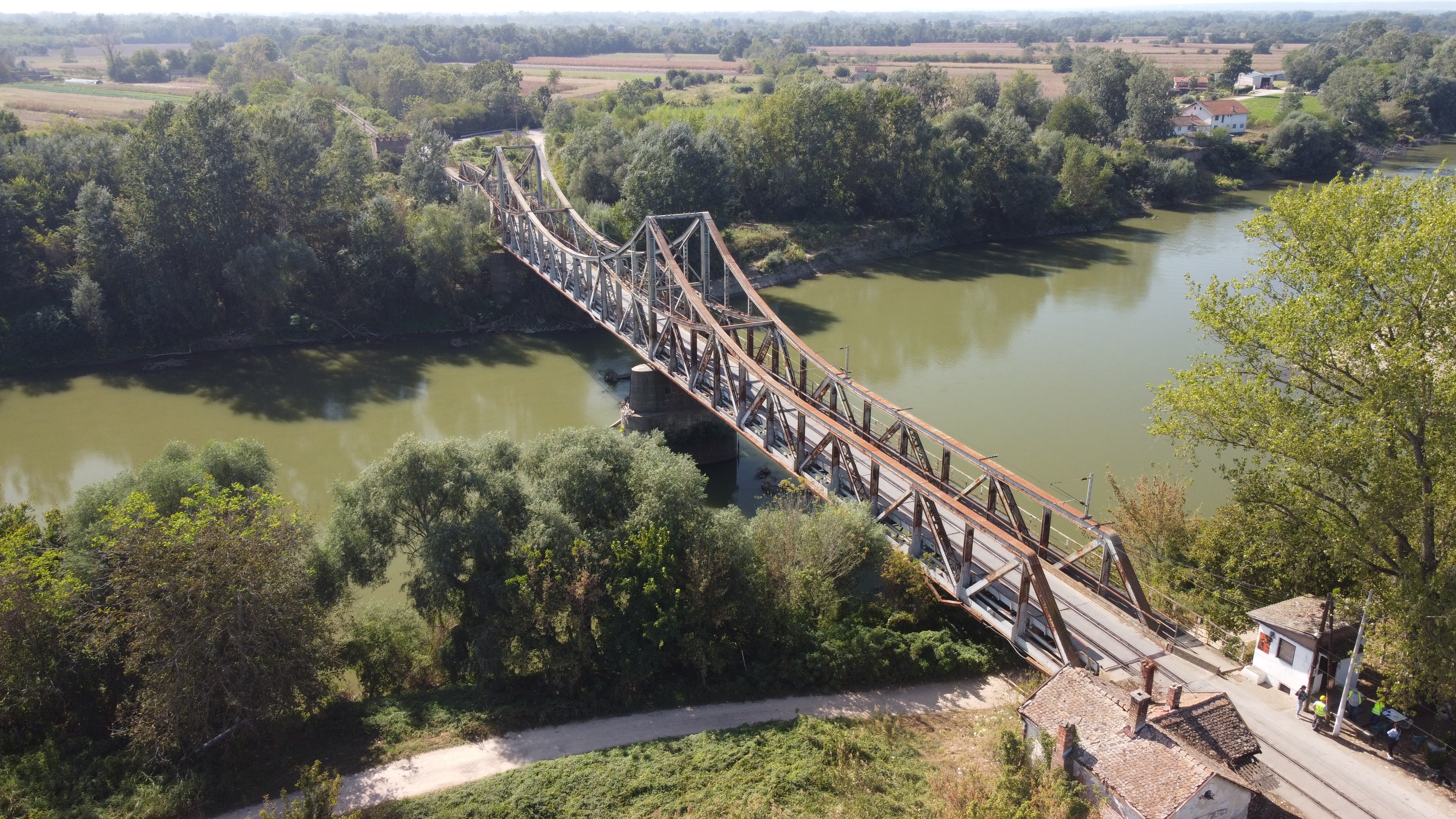
Design documentation for the rehabilitation of the steel structure and piers of the combined road–railway bridge over the Velika Morava River at km 82+142 of railway line no. 218 Mala Krsna – Majdanpek – Bor – Vražogrnac – Junction 2, and State Road IIB, route no. 377 at km 8+359 Požarevac (connection to State Road 33) – Osipaonica.
Bridge History
The bridge structure has been built, demolished, and reconstructed several times throughout history. Its origins date back to 1892, when it was first built by the Požarevac District. The previous bridge, originally designed as a road bridge, had to be modified. During load testing, the steel road bridge failed, after which the steel structure was strengthened.
In 1911, construction of the Mala Krsna–Požarevac railway line began, along with a new combined railway–road bridge. However, the Balkan Wars and World War I halted its completion. The Serbian army demolished the bridge for the first time in 1915 during its retreat. The Germans rebuilt it and later demolished it again in 1918 during their withdrawal. The new state, the Kingdom of Serbs, Croats and Slovenes, reconstructed the bridge in 1924, only for it to be destroyed once more by German forces during their retreat in 1944. Thus, the bridge ended up in the Velika Morava River for the third time. Remnants of the collapsed steel structure, still visible in the river today, testify to its tragic history.
After World War II, the bridge was reconstructed for both road and railway traffic. Since no original design documentation existed, a comprehensive bridge inspection study was prepared in 1980 by the CIP Transportation Institute. This included a full survey of the steel structure, preparation of complete graphical documentation, testing of steel material quality, load testing, and static verification calculations of all structural members and connections for load scheme I1 (Regulation 316 JŽ), as well as for actual train loads, locomotive type 665, and wagon load of 72 kN/m. Strengthening measures were designed for all elements that did not meet the required load-bearing capacity.
Based on this study, strengthening works on parts of the main bridge structure were carried out in 1981. During rehabilitation works, an underwater inspection of Pier 2 revealed the need for pier rehabilitation, which was designed in 1982 but never executed.
The most recent works on the bridge were carried out in 1992, when the existing timber deck was replaced with a steel deck with asphalt pavement, according to the Main Design for reconstruction prepared by D.P. Mostprojekt, Belgrade (1991). During these works, corrosion protection was renewed on bridge elements in contact with the new deck structure.
In 1997, an exploratory borehole was carried out at Pier 2 (S3), the most vulnerable pier, to determine foundation depth and construction material. Results showed a foundation depth exceeding 10 m below the riverbed level (+68.75 m). It was concluded that the Morava River had scoured the riverbed by 3 m due to inappropriate gravel extraction. Subsequent underwater surveys confirmed an additional 2 m of scour, placing the riverbed at elevation +66.75 m in the S3 zone.
General Bridge Data
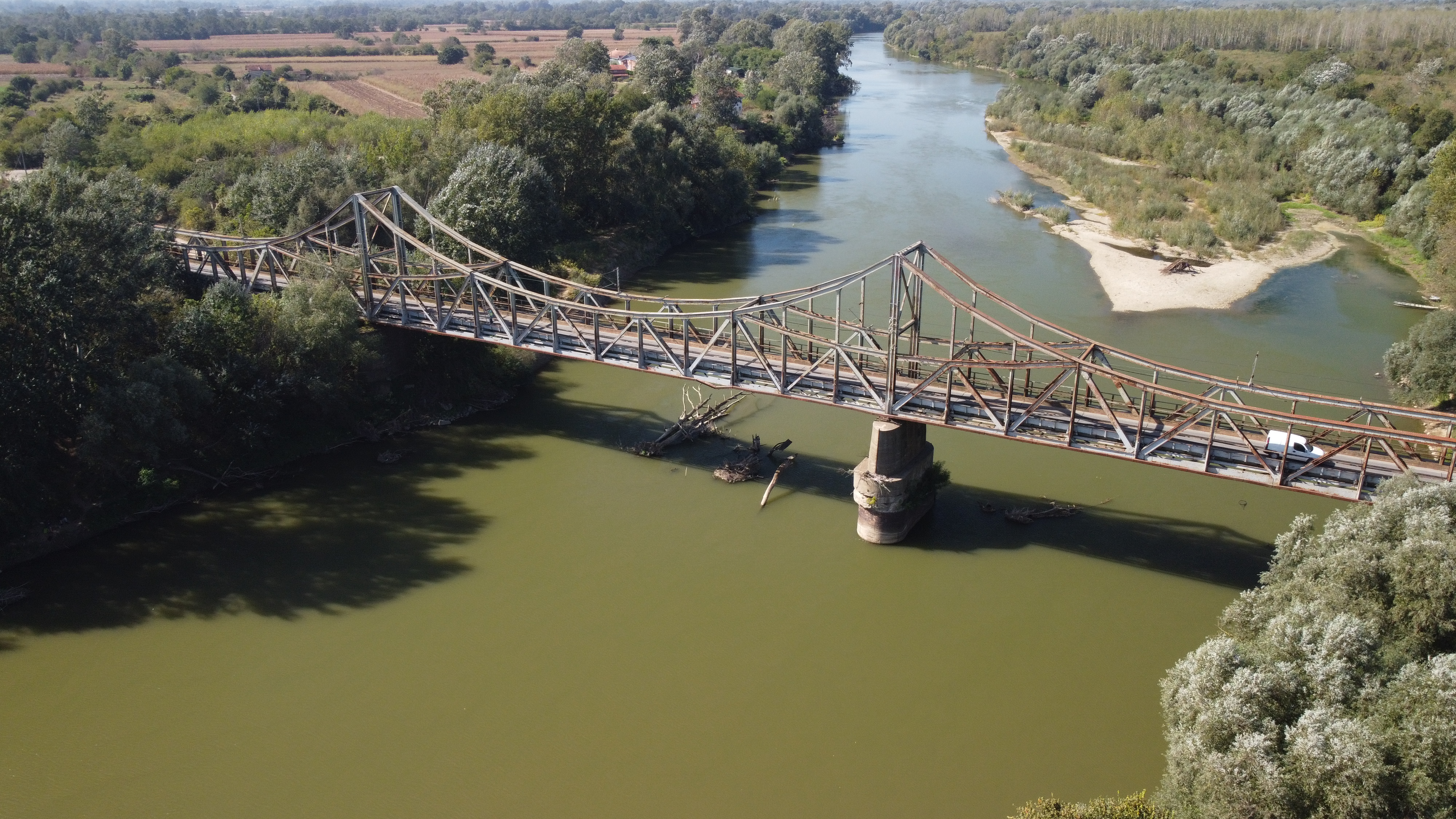
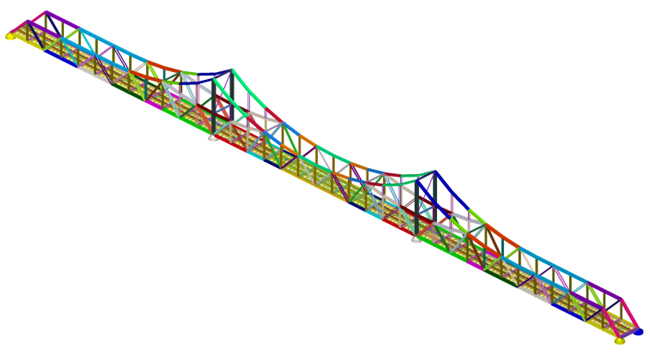
The bridge is a steel structure of the Gerber girder static system, spanning the river with three spans of 62.4 m each. The total length between bearing axes of the end piers is 187.2 m.